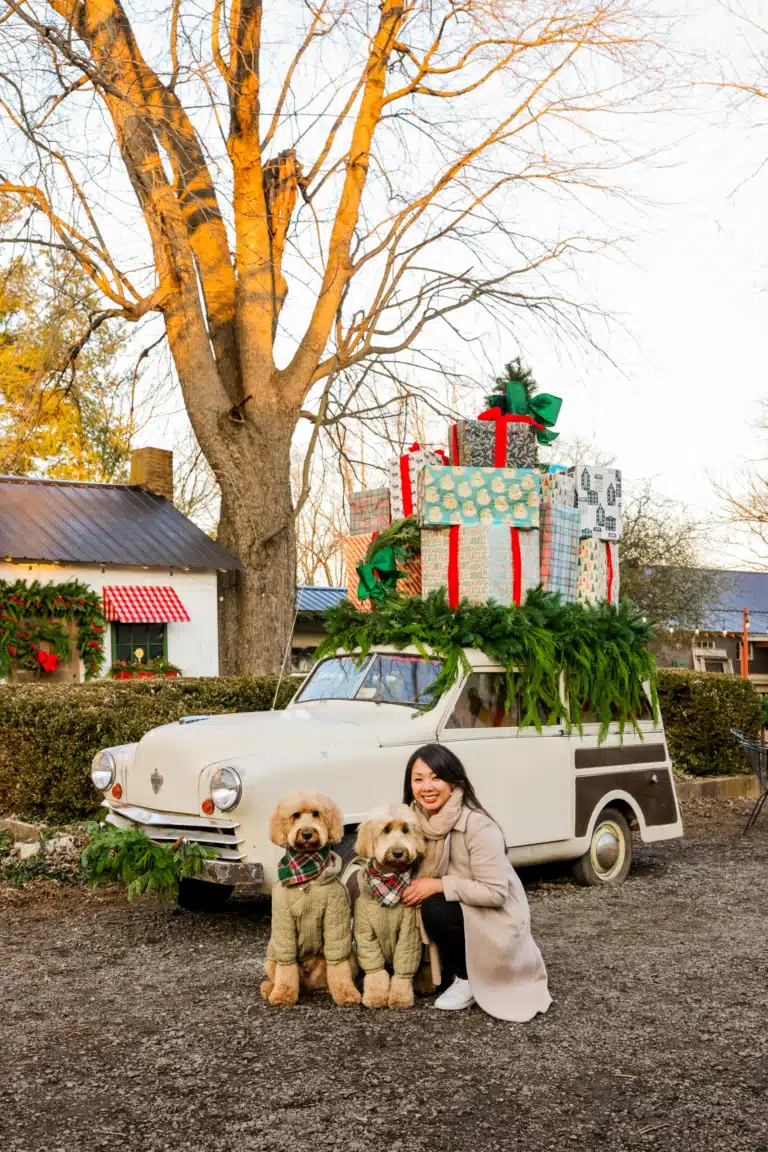
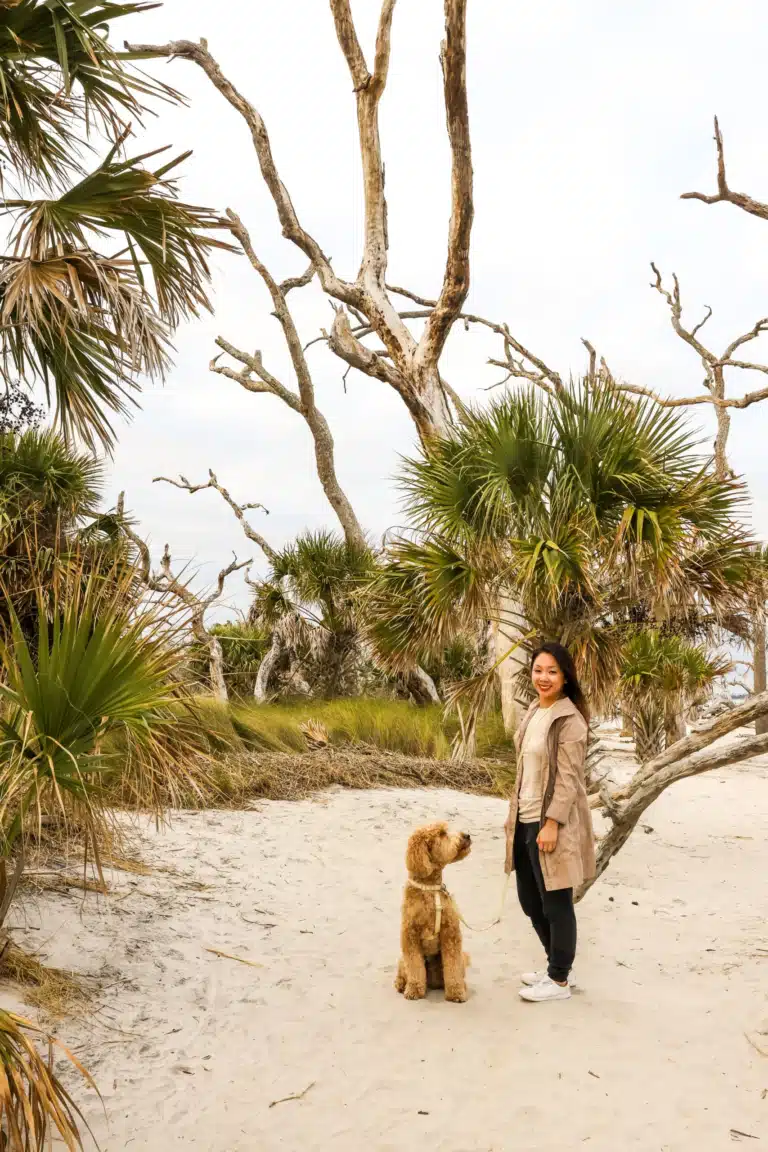
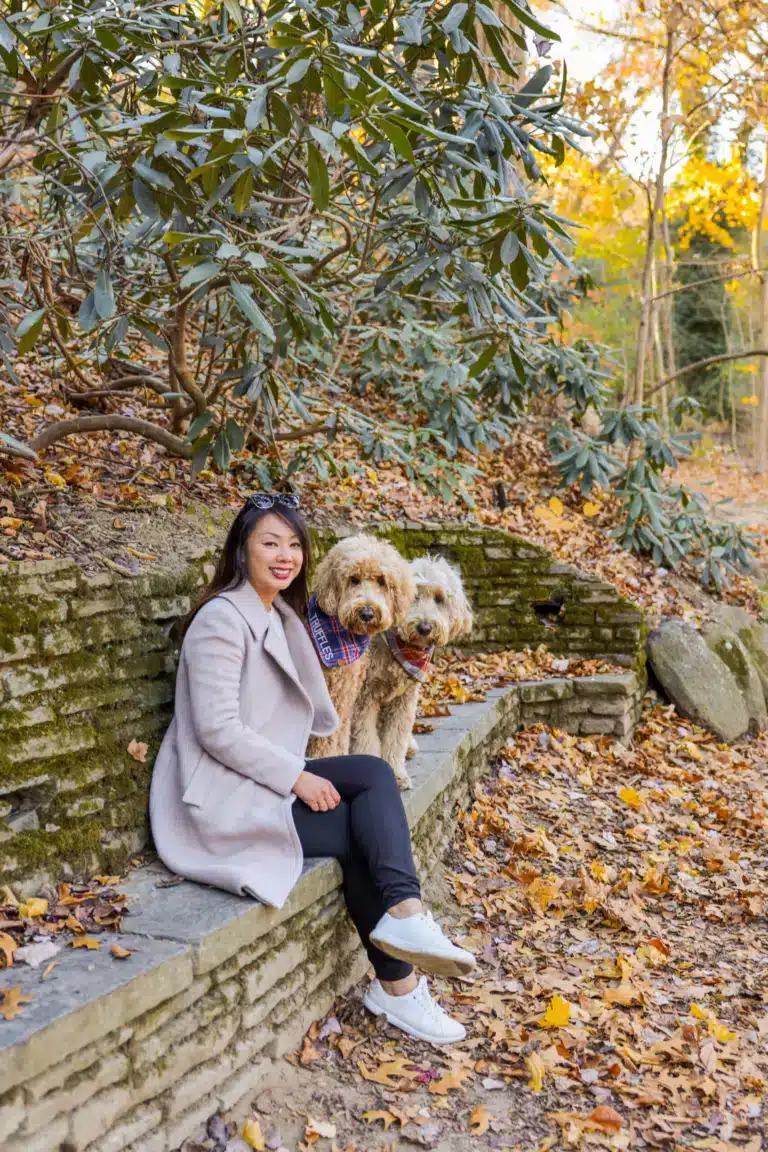
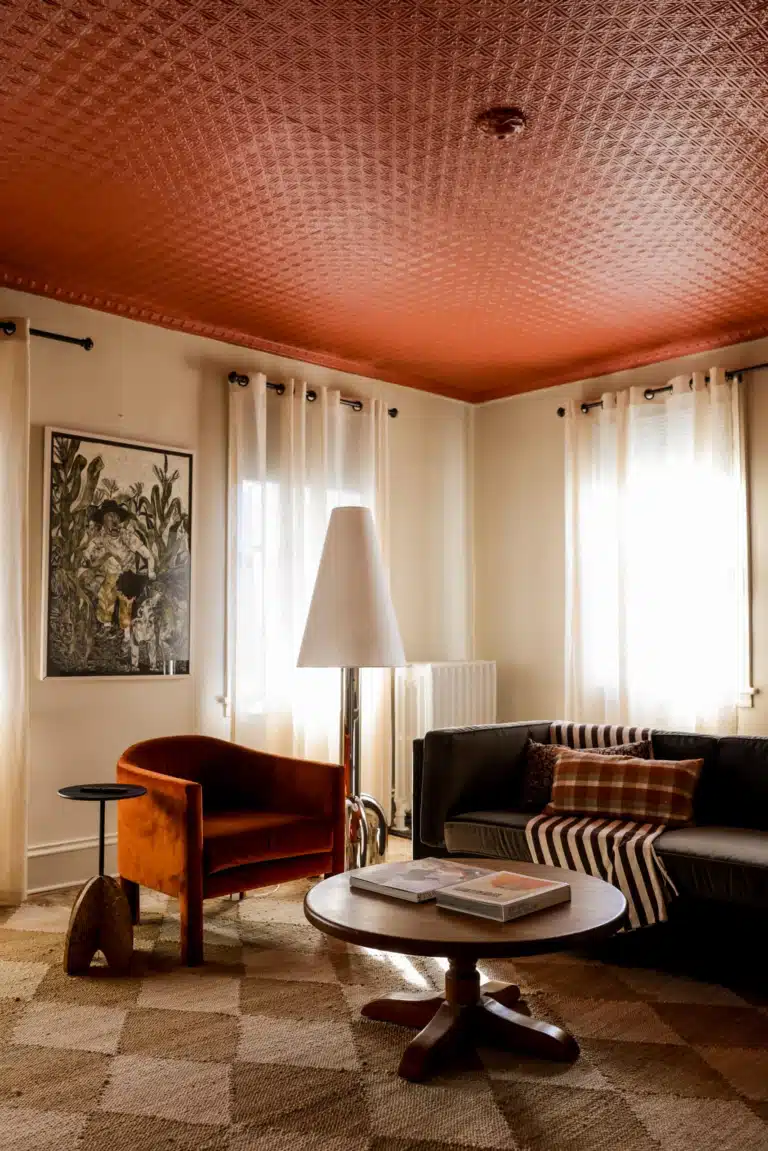
Travel changes where you sleep, what you see, and how your days unfold — but for us, it doesn’t change how we care for Truffles and Chai.
Over years of living and traveling with dogs, we’ve learned that the smoother the routine, the better the experience — for everyone. These aren’t rules we expect others to follow, and some may even feel controversial. But they’re the three non-negotiables that ground us, whether we’re at home or crossing state lines.
Because consistency, we’ve found, is what allows adventure to feel calm instead of chaotic.
1. We Wipe (and Sometimes Wash) Paws After Every Walk
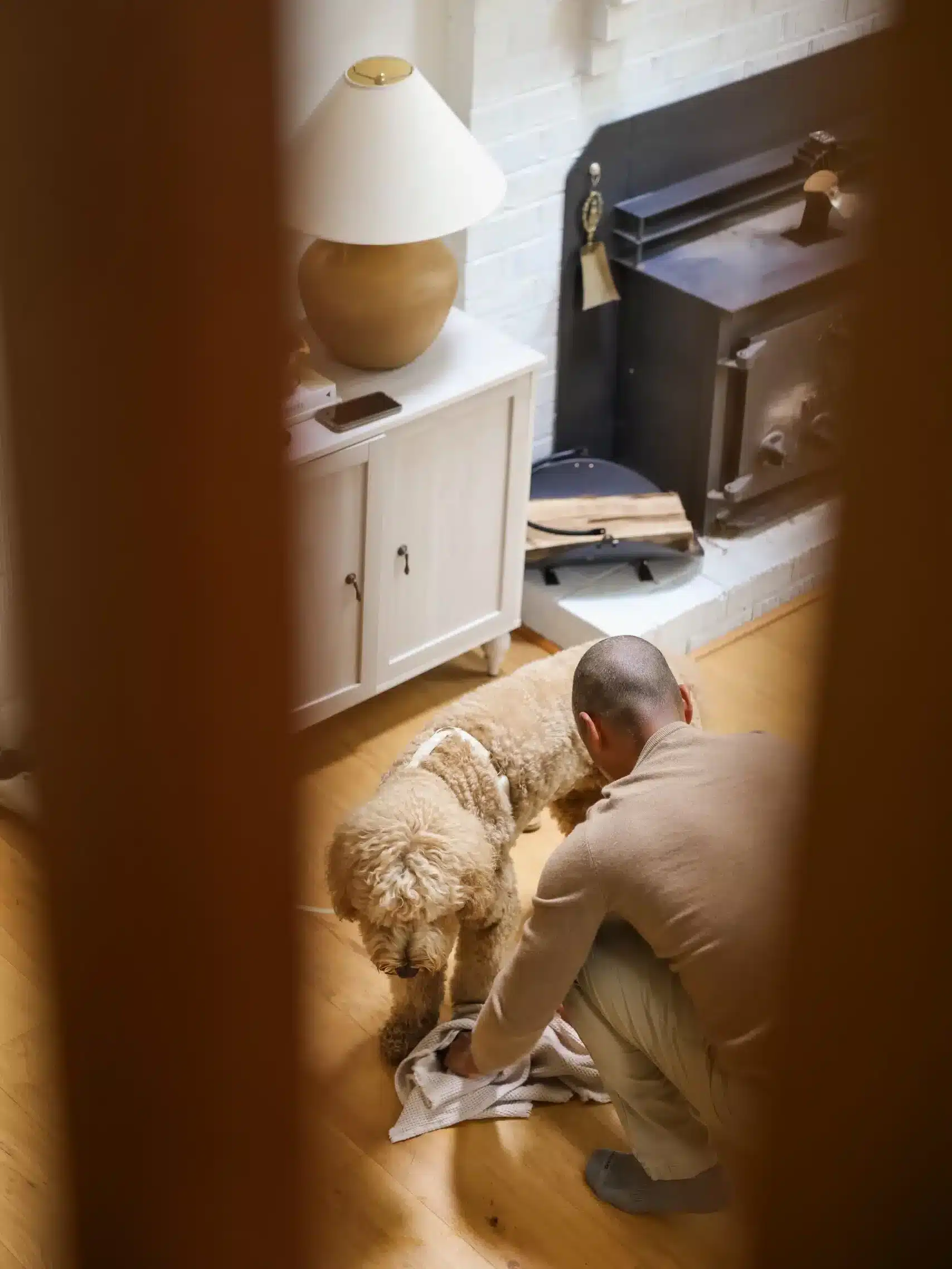
We’re a no-shoes household — and that mindset extends to paws.
Call it cultural habit, health consciousness, or personal preference, but we’re mindful of what gets tracked into our living space. Sidewalks, trails, city streets, and rest stops all carry bacteria, chemicals, and debris we don’t want inside — especially when traveling with dogs between environments.
Wiping paws has become more than a cleanliness habit; it’s part of our post-walk ritual. It’s when we:
- Remove harmful salt after snowy walks
- Check for stickers, thorns, or small cuts
- Slow things down before transitioning indoors
When we travel, paw wipes are always packed and easily accessible — in the car, in our day bag, and wherever we’re staying. It’s a small routine that helps unfamiliar places feel a little more like home.
2. We Keep to Routine Eating Times — and Prioritize Hydration
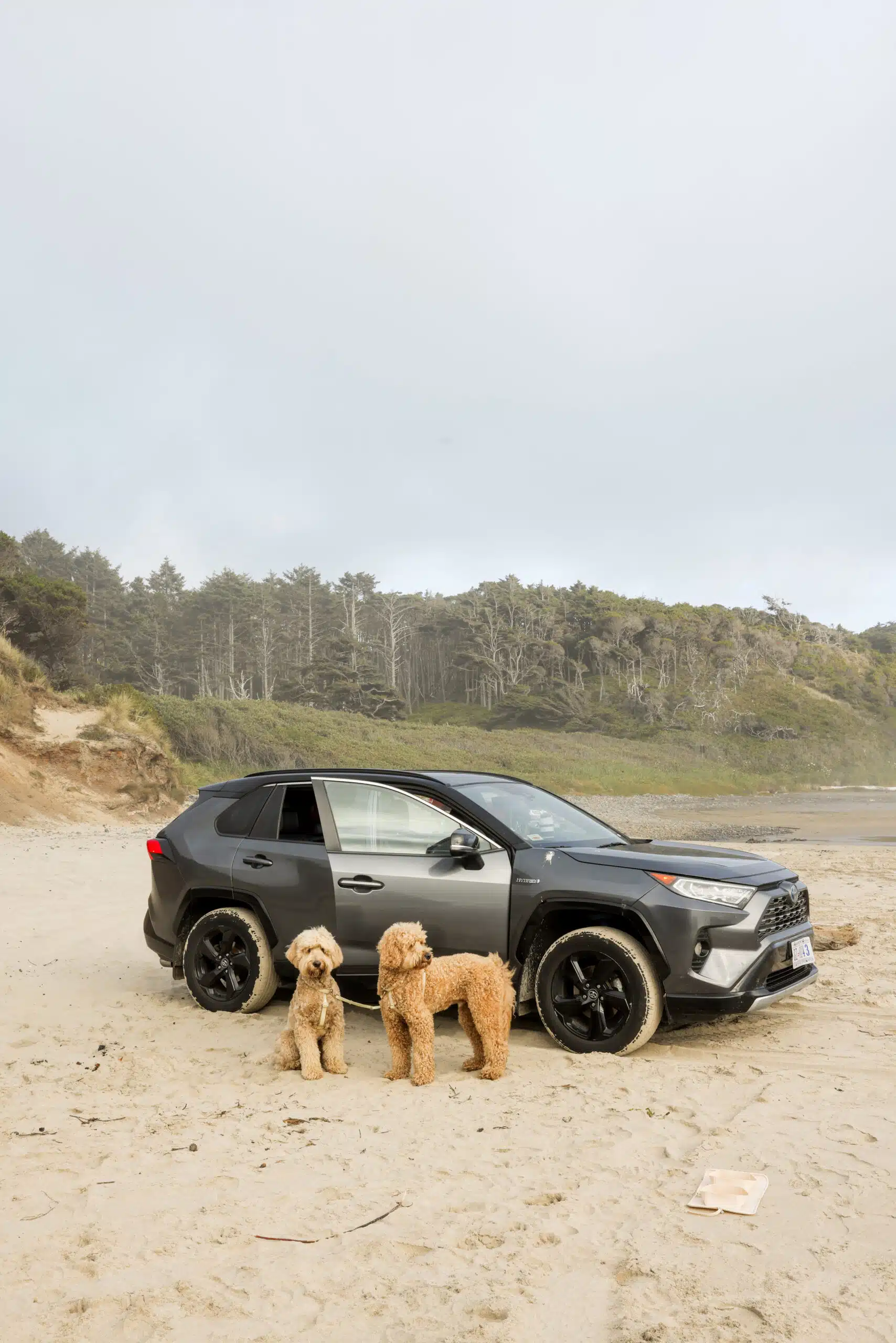
Travel days can be unpredictable, but meals are not.
We don’t feed at the exact same minute every day — but we do closely track when and where we’ll be so meals stay consistent. On the road, that often means planning our own breaks around theirs.
Dinner might coincide with:
- A gas stop
- A stretch break
- A quick bite for us
That pause serves everyone. The boys eat calmly. We reset. The drive continues with less restlessness and fewer surprises.
Hydration is just as important. We’re mindful to offer water regularly throughout the day — not just at meals — especially in warmer weather or after longer walks. A dog water bottle is something we never leave behind, whether we’re running errands or traveling across the country.
Keeping meals and hydration consistent helps regulate digestion, energy levels, and mood — particularly in new environments where everything else already feels stimulating.
3. We Always Build in Nap Time — and Practice Settling Everywhere
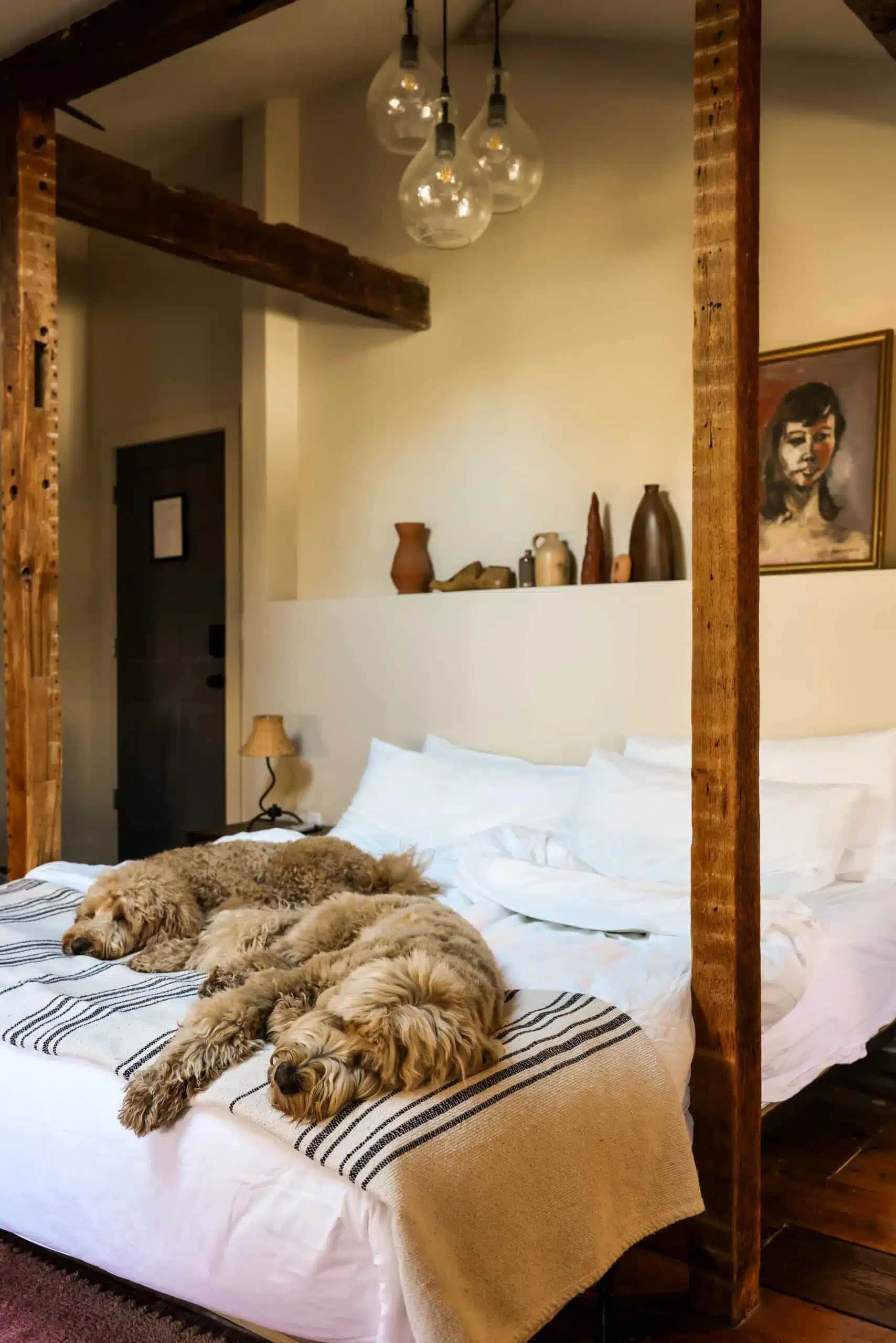
Just because we’re traveling doesn’t mean rest goes out the window.
One thing we often remind both dog and non-dog parents alike: dogs and humans operate on almost inverse activity schedules. While humans thrive on about eight hours of sleep, dogs should ideally be active for only about eight hours — meaning they need 16–18 hours of rest each day.
Rest isn’t just about physical recovery. Adequate sleep directly affects a dog’s ability to stay calm, focus, and regulate emotions. When dogs don’t get enough rest, it often shows up as overstimulation, anxious behavior, reactivity, or difficulty settling — something most of us recognize instantly, because we’ve all seen what too little sleep does to humans, too.
We treat rest as essential, not optional.
On travel days, nap time often happens naturally while driving. We’ve set up a bolster bed in the car, which has worked especially well for Truffles and Chai. It gives them:
- Physical support during turns and stop-and-go traffic
- A stable, familiar place to fully relax
- A clear signal that it’s time to rest, not stay alert
We’re especially proud that Truffles and Chai can settle and nap in a variety of settings — the car, a new stay, or somewhere unfamiliar. That didn’t happen by accident. It came from consistent routines, gradual desensitization, and teaching them that rest is safe and expected, no matter where we are.
We also intentionally build in nap time after meals.
This isn’t just about routine — it’s about safety. Large, deep-chested dogs are at higher risk for Gastric Dilatation-Volvulus (GDV), commonly known as bloat — a life-threatening condition where the stomach fills with gas and can twist. Many veterinary sources recommend avoiding activity for at least:
- 30–60 minutes after smaller meals
- 2–3 hours after larger meals
By building post-meal rest directly into our daily rhythm, we protect their health and support their ability to show up calm, settled, and engaged for the rest of the day.
Why These Matter — Everywhere We Go
These non-negotiables don’t limit how we travel — they enable it.
Routine creates predictability. Predictability creates calm. And calm is an important factor that allows dogs to explore new places confidently, adapt to change, and truly enjoy the journey.
Whether we’re at home, staying somewhere new, or driving across the country, these practices help us move through the world with intention — not just checking places off a list, but living well along the way.
Because traveling with dogs doesn’t have to disrupt your life to be meaningful. Sometimes, it simply asks you to bring the parts that matter most with you.
→ Continue reading: A Dog Parent’s Guide to Traveling Well — For You and Them